

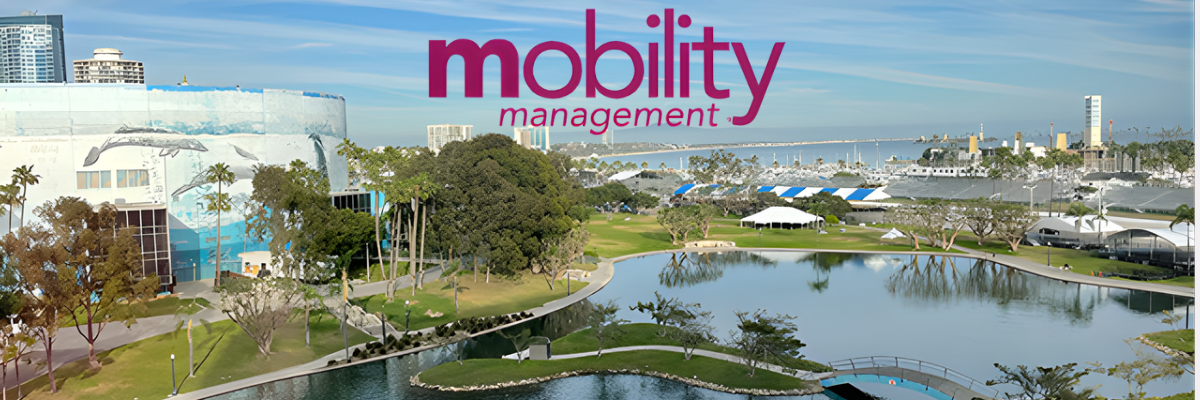
The Abilities International Accessibility Conference — a professional conference by Raccoon Media, owner of the consumer-focused Abilities Expo — made its debut at the Long Beach Convention Center, March 26–27 (with the Southern California Abilities Expo co-located over the weekend, March 27–29).
The general setup: The conference featured several different tracks, though attendees were free to choose from the entire roster of classes. Mornings began with all-attendee plenaries. Rooms were well filled, but not packed — a factor that enriched participants’ experiences, according to my non-scientific survey.
I’ll have more focused coverage of the event in future issues, but here are my immediate takeaways.
— The education was excellent, not surprising given the educational partners who contributed to the conference: The Association for Driver Rehabilitation Specialists (ADED), the International Seating Symposium (ISS), the Clinician Task Force (CTF), the Rehabilitation Engineering & Assistive Technology Society of North America (RESNA), and U.S. Rehab.
The smaller number of conference attendees surely contributed to the truly hands-on, interactive feel of every class I attended. Depending on the session, attendees climbed into ultralightweight chairs to learn how to tackle slopes that angled both upward and sideways; discussed how to adjust seat slope without swapping out a manual wheelchair’s frame; learned examples of advocating “with grace” (according to presenter Jenny Siegle); or cracked the code for tallying “no power/single power/multiple power option” power bases when incorporating seat elevation.
I know conferences seek to grow year over year. But the smaller number of attendees — compared, for instance, to ISS standards — provided more opportunities for attendees not just to ask questions of the presenters, but to also share their experiences and ask questions of each other. RESNA’s “Ethics in Action” session, hosted by RESNA Executive Director Andrea Van Hook, was a great example, with robust debate over conflicts of interest … and what to do when a competitor isn’t acting in an ethical manner.
I expect word of mouth about the education to be very positive. Sessions were in depth, even for industry veterans, but also made room for attendees newer to seating and wheeled mobility.
— All the usual suspects attended … plus more! Attendees included occupational and physical therapists (OT/PT) and Assistive Technology Professional (ATP) suppliers, as you’d expect. But there were also smatterings of speech-language pathologists and other clinicians, and related professionals such as orthopedic impairment (OI) teachers.
While the conference did largely attract local/regional attendees, the range of specialties and employers — from schools to Complex Rehab Technology (CRT) providers to hospitals and private practice — made for deep and varied perspectives that presenters encouraged.
Cross-pollination was strong in the sessions I attended: Clinicians went to policy classes, ATP suppliers attended clinical classes, etc.
— Consumer and caregiver voices were well represented. As the conference overlapped the consumer-focused Abilities Expo, it felt only right that consumers and caregivers played a major role in the professional portion of the event.
Those fingerprints took many forms. For example, the aforementioned Jenny Siegle — a producer for Denver-based Altitude Sports and a power wheelchair rider from early childhood — was a panelist for Friday’s plenary: “From Small Acts to Big Wins: Policy and Advocacy in Assistive Technology.” Jenny also co-presented with CTF Executive Director Tamara Kittelson, MSc., OTR/L, ATP/SMS, for the “Disability Language: Think Before You Speak” session.
Tamara, whose daughter Eleanore was born with cerebral palsy and profound deafness, spoke on her experiences as a parent in “Facing Change: The Many Facets of Adjustment in CRT.” While wearing one of Eleanore’s necklaces, Tamara talked about how very different it felt to consider seating and wheeled mobility equipment as a mom, rather than as a CRT professional.
And in the session “Positioning with Purpose: Sustainable Strategies for 24-Hour Posture Care Management,” co-presented with Lee Ann Hoffman, EdD, OTD, MSc, OTR/L, ATP/SMS, CAPS, Tamara shared a case example of a mother who’d dutifully repositioned her daughter every two hours all night long — from infancy into adolescence — and how deeply that impacted the entire family.
Presenters made sure that assistive technology consumers and their families stayed at the heart of so many conversations. A Friday afternoon “field trip” to the in-progress Abilities Expo right next door drove home the importance of that point of view.
— Long Beach is a beautiful place to hold a show and conference (conflict of interest disclosure: I graduated from California State University, Long Beach, and worked for the Long Beach Unified School District). The convention center could have been more supportive of both conference and expo attendees by opening multiple entrances, including those just a few feet from the Hyatt Regency Long Beach that was in the hotel room block … and, more importantly, by conspicuously providing signage for elevators and accessible routes.
I look forward to those improvements from the convention center, plus more of this incredibly meaningful education, when Abilities returns to Long Beach in January 2027.
By Laura Watanabe